Blog
How to do Blocking for Speech Events
Written by Jason Stansell
There are a variety of techniques different coaches teach when it comes to blocking. Some are event specific, some are regional. I, coming from a theatre background, have a more theatre-based approach to coaching blocking. But “What is blocking?” you may ask…
Blocking is the specific movements we do when we are performing. As debate is much more minimal, I’ll touch base with it then move onto Speech events.
Debate
In debate, the most full-body movement you will do is standing up when it is your turn, maybe stepping to a podium at an in-person tournament, but even that varies. However, when you start speaking, there’s an important question: What do you do with your hands? Some of us already speak with our hands anyway, and a few, like me, sometimes too much. A good rule of thumb, if you talk with your hands too much, hold the sides of your laptop until moments that need emphasis.
- If you’re going to raise your voice for acknowledgment of an absurdity, show it with your hands.
- If you’re numbering things off, count it out on your fingers.
- If you’re going to be describing a hypothetical spherical time machine (which is absurd as we all know time machines look like a blue, British police box) use your hands to show the shape.
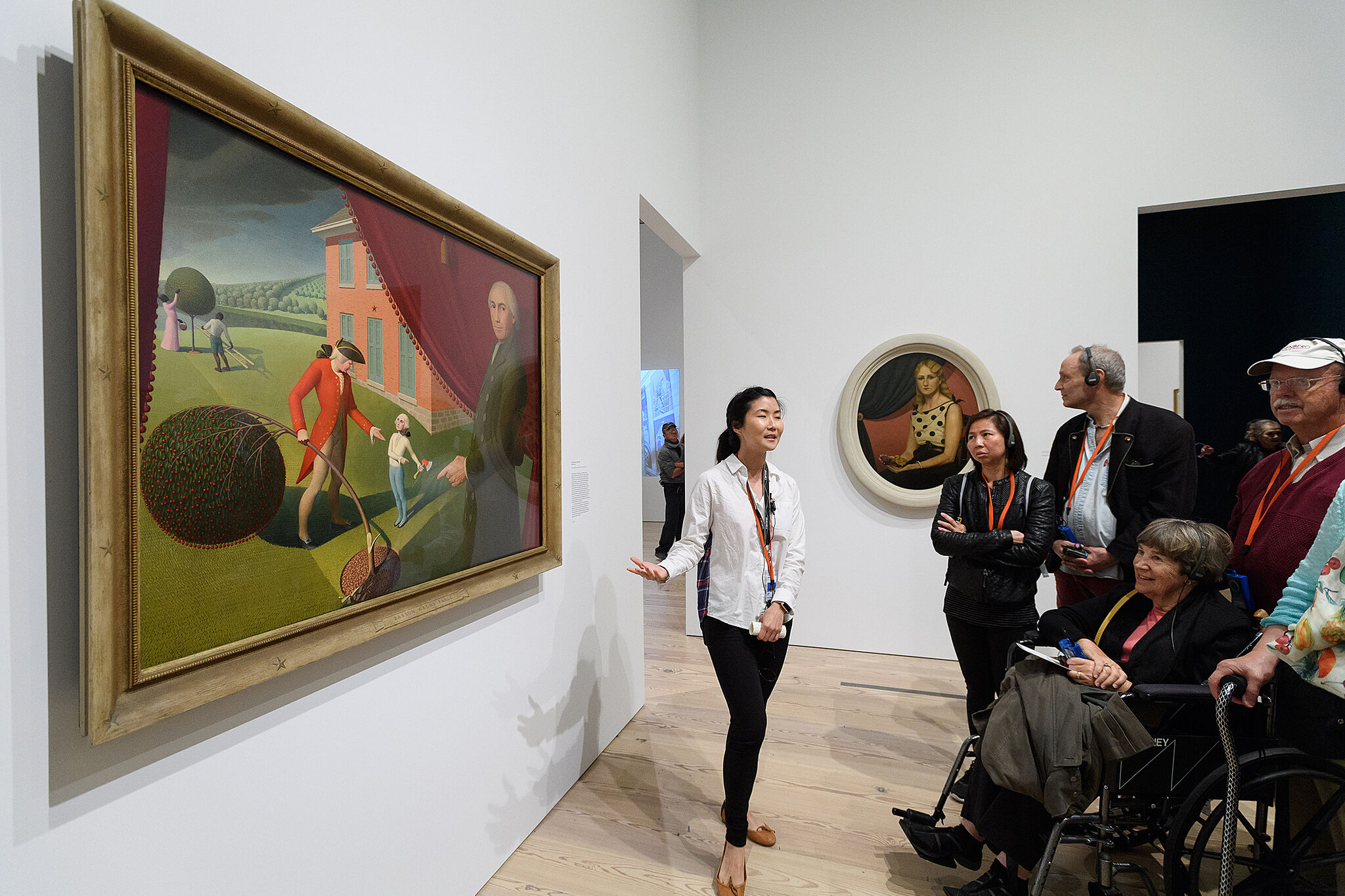
Don’t be afraid to use your hands the way a tour guide might to lead the judge step by step through your case.
Dramatic/Humorous Interp
On the other extreme end, we have the Interpretation Events: Dramatic Interp, Humorous Interp, and Program Oral Interp. In all three you are there to own the stage. Make it yours. You’re the actor performing a piece.
Think of the entire area you have around you as your stage, because, well, it is. Move towards the left or the right, forward or backward, all depending on the scene. However, there’s far more to it than that.

Look at the image above. While performing you are in the center square. Everywhere you move on the stage, that’s where your narrator is, still in center. Now, when you play as different characters however, that’s where things change. Let’s say you’re doing a scene from the book, “Holes” as an example. Your narration (as opposed to the film which wouldn’t have any) will always be center. But, if those other squares are for the characters in your piece. So, as Stanley you could step right, but turn to face “cheat left” (which means to more or less face the corner to your left at a diagonal angle for the audience), then if you were to switch to Zero, you’d move past the narrator’s square on the left, and cheat right, to play him. This way the two characters can have a conversation.
You’re also able to do “popping and morphing,” which could be a blog in itself, but essentially it’s doing different body language that makes each character unique, and “popping and morphing” between them quickly for different transitions. So, Using “Holes” as the example again, if you’re doing a scene with Madame Zeroni, you may perform her leaning over on a cane, using slow deliberate movements, while Stanley’s “no good, dirty rotten, pig stealing great great grandfather”, you could perform standing straight and a bit sure of himself.
Also, don’t forget emotional blocking, reacting to the scene. You’re not Spock from Star Trek trying to keep logical and unemotional… but don’t overdo it. If it’s a sad moment for example, follow the text. If the character is holding it together in their dialogue, you’re not going to drop to your knees crying, just to get back up and have the character in control. But pause speaking, and having the character respond to the moment, possibly wiping a single tear from their eye, can be highly effective.

POI
Everything that applies for the other interp events, applies here for Program Oral Interp as well. However, there’s some extra caveats. You’re not just performing one piece, you’re interweaving multiple different pieces together. So, you’re not just acting out, you’re the architect of what you want the audience to feel. You’re blocking is much more reliant on your own voice, the message you’re trying to get across with your piece. Also, unlike the other interp events, you have your manuscript with you. While you must have it memorized, don’t forget to turn the pages as needed.
Limited Prep Events
For both Impromptu and Extemp, there are a variety of different blocking techniques taught around the country. While I learned a style that was more similar to the Interps above, I’m going to give a brief explanation of the technique we teach here at PDA, that our classes go over in greater depth: The Speaker’s Triangle. Essentially, comparing your speech to a five-paragraph essay for class:
- Your subject would be given center stage
- Take 2-3 steps back and to the side to form the next point in your triangle
- Paragraph/Point One
- Take 2-3 steps to the side, standing behind where you were standing originally
- Paragraph/Point Two
- Take another 2-3 steps to the side, standing behind where you were standing originally
- Paragraph/Point Three
- Lastly, take another 2-3 steps back to your starting point
- Give your conclusion.
It helps illustrate the different key points of your speech in a way that roaming around the stage in a performative way would not.
Informative Speech Events
It’s in Original Oratory and Informative where things get interesting. You’re not just standing still like in Debate, but you’re not exactly in a situation to roam the entire stage like in an Interp, and you’re rarely going to have three main topic points like you will have for the Limited Prep Events. My best advice is to take the best of all of the above and work them into your piece as you see best.
However, there are some caveats as Original Oratory and Informative are different beasts despite their similarities (think donkey versus zebra). With Original Oratory you’re giving a speech about something that matters to you on something you want to explain or advocate. The best Orators in competition know when and how to use the stage to make a point, and you can too. You’re not up there “performing”, so every movement must be done for a reason, not storytelling. That doesn’t mean that you can’t tell a story or be animated, it just means that it hast to have specific intent behind it. You can use the stage, but if you’re roaming all over the place it would get distracting, so use the stage with much more specific intent than one would for an Interp. At many points, you’re going to need to stand still, but don’t let that take away from your blocking, as you can block just as you might for debate.
With Informative, you typically have your “display”, whether the typical tri-folding, display board, an easel with posterboard “cards”, a green screen with a Google Slide projection, or any other elaborate creation. Well, think of yourself having an invisible bungicord umbilical to your “display”. You can walk around it, move somewhat away from it, but you’re always coming back to it to handle your display. It’s there and interactive for a reason. Ignoring it would be absurd, but so would constantly having your hands all over it constantly. Find the right balance and make use of the area around your “display”.
Regardless of everything, whether you use a lot of blocking, or hardly none, remember the most important rule: have fun with it. Doesn’t mean it has to be a fun piece, if you’re doing any of these events talking about the Holocaust, there is nothing “fun” about it in that sense, but that doesn’t mean that your piece has to be boring at all. Lean into the subject matter. The point being that if you’re entertained by this, there’s a good chance that others would be too, this includes the judge. But if you’re bored out of your skull, there’s a very good chance that the judge will be as well.