Blog
Finding Your Voice: A Guide to Speaking Opportunities for Young Competitors
Written by Mahek Acharya
You’ve mastered the art of constructing arguments in seven minutes. You can flow a debate round, respond to counterarguments, and deliver a compelling rebuttal under pressure. But what happens when you want to use these skills outside the tournament room? What if you’re hungry for more opportunities to speak, lead, and make an impact with your voice?
The truth is, the world needs speakers with your skills. From community organizations to digital platforms, from local government to global initiatives, countless opportunities exist for young people who can communicate effectively. The challenge isn’t finding opportunities—it’s knowing where to look and how to match your interests with the right platforms.
This guide will help you discover speaking opportunities that align with your passions, expand your skills, and let you contribute meaningfully beyond competitive debate.
Why Seek Speaking Opportunities Beyond Debate?
Before diving into specific opportunities, consider why expanding your speaking portfolio matters. Tournament debate provides incredible skill development, but it represents just one type of public speaking. Speech events, such as the ones we also compete in, provide another type of speaking, however, still limited. Real-world speaking often requires different approaches: connecting authentically with diverse audiences, communicating without rigid time constraints, speaking about issues you genuinely care about rather than strategic positions, building long-term relationships through communication, and adapting your message based on audience feedback in the moment.
Seeking additional speaking opportunities helps you discover which communication styles energize you, develop versatility as a speaker, build a leadership record that extends beyond competition, explore potential career paths in advocacy, education, media, or policy, and create meaningful change in your community using your voice.
Youth Leadership and Civic Engagement
Local and national organizations actively seek young people with strong communication skills to participate in civic life. These opportunities let you advocate for issues you care about while developing practical political communication skills.
Youth City Councils and Advisory Boards
Youth city councils and advisory boards exist in hundreds of communities across the country. These bodies advise mayors, city councils, and local government departments on issues affecting young people. Members typically:
- Attend regular meetings
- Conduct community outreach
- Present recommendations to adult officials
- Speak at public events about youth priorities
Your debate and/or speech experience makes you an ideal candidate because you can research issues thoroughly, synthesize multiple perspectives, and present findings persuasively. Unlike debate, where you argue assigned positions, or informative speaking events where you’re informing an audience about a chosen topic, these roles let you advocate for changes you believe in while using your analytical and persuasive skills.
Student Voice Organizations
Student voice organizations like Student Voice, Mikva Challenge, and Generation Citizen train young people to engage directly with policymakers. These programs teach participants to:
- Identify community problems
- Research potential solutions
- Craft testimony
- Present to school boards, city councils, or state legislatures
The speaking feels less performative than debate and more conversational, helping you develop an authentic advocacy voice. Many programs culminate in action civics projects where you present your work to real decision-makers who can implement your ideas.
State and National Youth Councils
State and national youth councils provide speaking opportunities at higher levels of government. Organizations like the National Youth Council and various state-level youth advisory bodies to governors offer platforms where you can:
- Speak about policy priorities
- Participate in regional or national conferences
- Present workshops to peers
- Sometimes testify before legislative committees
These selective opportunities look impressive on college applications while giving you substantive speaking experience.
Community Organizations and Nonprofits
Nonprofit youth boards or advisory committees provide governance experience alongside speaking responsibilities. Many organizations, from environmental groups to social service agencies to arts organizations, maintain youth councils that present at annual meetings or fundraising events, represent the organization at community gatherings, speak to potential donors or volunteers, and provide youth perspectives to adult board members. These roles teach you stakeholder communication, a valuable skill that differs from debate’s adversarial approach.
Volunteer speaker bureaus connect community members with organizations needing presenters. Some nonprofits, especially those focused on health education, environmental awareness, or social issues, train volunteer speakers to present at schools, community centers, or public events. You might speak to elementary students about literacy, present to senior citizens about technology, lead workshops at community centers, or participate in awareness campaigns. These audiences respond very differently than speech and debate judges, teaching you to adjust your communication style for maximum impact.
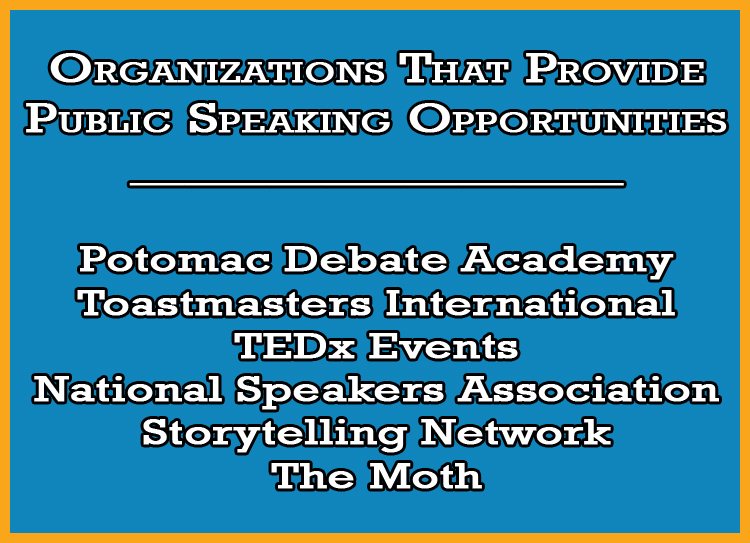
Community storytelling projects celebrate local voices through structured speaking opportunities. Organizations like StoryCorps, The Moth (which has youth programs in some cities), or local oral history projects need young people who can craft and deliver compelling personal narratives. This type of speaking develops your emotional connection with audiences and helps you find your authentic voice beyond argumentation.
Model Government and Simulation Programs
If you love the research and policy analysis aspects of debate, model government programs offer speaking opportunities that simulate real-world governance.
- Model United Nations extends far beyond school clubs. Community organizations, universities, and international bodies host MUN conferences where you represent countries in simulated UN committees, deliver position speeches and working papers, negotiate resolutions, and present findings to larger assemblies. While MUN speaking is more formal and diplomatic than debate, the research skills transfer directly. Some conferences also include opportunities to speak to local officials about international issues, bridging simulation and real advocacy.
- Youth in Government programs, typically run through YMCA chapters, simulate state legislatures where students draft legislation, debate bills in committee and on the floor, run for leadership positions with campaign speeches, and sometimes present to actual state legislators. The program teaches legislative procedure while providing structured speaking opportunities that feel more collaborative than debate’s competitive environment. Many states hold annual Youth in Government conferences where hundreds of students participate in intensive weekend simulations.
- Mock trial programs offer another avenue for applying argumentative skills. Beyond the competitive circuit, mock trial teams often perform demonstration trials for community groups, speak at courthouses for law-related education events, present to civics classes about the legal system, and participate in lawyer mentorship programs. The speaking style emphasizes persuasion and storytelling rather than rapid argumentation, developing different communication muscles than debate.
Educational Speaking and Tutoring
Your ability to explain complex ideas clearly has educational value. Several platforms let you use this skill to help others while practicing explanatory communication.
Peer tutoring and mentorship programs in schools and communities need articulate students who can break down difficult concepts. Whether you’re helping younger students overcome public speaking anxiety, tutoring peers in research and writing skills, leading SAT or ACT prep sessions, or mentoring new debaters in your program, these one-on-one or small-group interactions develop your ability to adapt explanations to individual learning styles. The patient, supportive communication required differs significantly from debate’s rapid-fire exchanges.
Library and bookstore programs often seek teen volunteers for story times and reading programs, book discussion leadership, homework help sessions, and research skills workshops. These opportunities provide low-pressure speaking practice while serving your community. Many libraries actively recruit teen volunteers and will work with your schedule around debate tournaments.
Online education platforms increasingly feature student instructors. With parental permission and platform approval, you might create educational videos for YouTube channels, lead virtual study sessions, host workshops on debate skills or public speaking, or participate in peer learning communities. While building an online presence requires time and consistency, it creates a portfolio of your communication skills while potentially reaching hundreds or thousands of people.